The Nation’s Online Habits Revealed…

Posted on

I’m well known for following (and openly criticising) the antics of the University College London, who seem to spend most of their time confirming the obvious. Yet my reservations aren’t shared by many. Every other day I’ll see figures from one of their meaningless studies propping up new stories from red tops and broadsheets alike - even politicians on Question Time regularly use UCL stats to bolster their arguments. It’s seems we all love a good survey.

So when an altogether more innocent one about the Nation’s Online Habits landed in my inbox from the folks at Ladbrokes Bingo, I thought I’d get off my high-horse and take a look. It seems they’ve collected data on over a thousand of their registered users and the results make for interesting reading. Okay the pool of people is tiddly and you have to keep the context in mind, but I got chatting to Craigy about it last night and we giggled and argued in equal measure over the results.

It seems Facebook is still the social media site of choice with 63% of people surveyed listing it as one of their top three sites. Twitter comes a respectable second with 30%. Linkedin and G+ held 10% respectively proving that people are beginning to take their careers online to search for new jobs and show off their experience Surprisingly some 27.5% of people surveyed didn’t visit social media sites at all.

Sadly 3% of people surveyed had been stalked online. This might seem low, but 3 people in 1000 is, of course, too many. Or is it? Funnily enough 3% also admitted to stalking! Of course this entirely depends on your definition of stalking. I’ve certainly used Facebook to check out love interests (before Craig, of course). This was part of my dating ritual, and my pathetic little nod to ‘responsible’ dating. I’d check to see if someone was single, what they do for a living, if they had any children… whether they can they spell? The basics really.

2010-11-30-stalking_then_and_now

Where these stalking stats really get interesting however, is when you compare the activities of the self-confessed stalkers by gender. Without getting too bogged down by figures it seems both women and men are equally likely to check out a potential conquest - no surprises there. But men are almost twice as likely to check up on an ex-partner and their friends. Women, on the other hand, are far more preoccupied with love rivals and their partner’s ex’s. I’d simply love to see how these trends would play out as part of a wider study with more participants. There’s definitely some comments begging to be made here about the dating psychology of men vs women.

Getting a little more risque now - 10% of people surveyed had partaken in cyber sex. Surprisingly (to me anyway) this is further broken down by gender with 7.5% of women, and 12% of men making the admission - I had expected less women, and more men. What actually is cyber sex anyway? Talking dirty to someone via IM, or getting down to it in front of a webcam (either alone, or with another)? Either way, this number seems extraordinarily high and a little worrying. Add to this that a whopping 38% of people (of which 18% are female, 60% male) admit to having watched adult content, and it certainly does make you wonder what goes on behind closed doors. Although it’s worth pointing out that all participants are over the age of 18 and therefore responsible adults, I’ve made my feelings on pornography perfectly clear on previous occasions.

So is there anything worth worrying about here? Well on the whole, the adverse impact of social media on people’s lives seems negligible. Only 4% felt their social media usage had adversely affected their career, and a similar number felt it had contributed to the breakdown of a relationship (6%) - unsurprisingly this view is more prevalent among the 18-24 year old’s surveyed. Although relatively small percentages, it still highlights the need to use social media carefully and responsibly. I’ve worked in the social media industry and been a keen personal user for some years now and have seen plenty of incidences of it doing just that. I’ve seen a co-worker dismissed for posting a derogatory comment about our (then) employer, and during the beginning of my relationship with Craig I’ve had a few abusive comments hurled at me by his ex girlfriend. Sadly, with online bullying, the rise of sex-texting, and the distressing news that a few teenage suicides have been linked to social media, I can foresee these figures rising dramatically by the time our teenagers enter young adulthood.

250287_2100550077905_1370027757_4472466_5351376_n

Caught in the act - Facebook cheat ‘Dave’ gets his comeuppance

Scarily, BBC News and the Daily Fail Mail (whoops, slip of the finger there) are the news sites of choice for 71% of people surveyed, with broadsheet offerings only getting the slimmest of look-ins. Of course we do have to consider who these participants are - I’m sure there aren’t too many city stockbrokers, lawyers, or chief execs indulging in a bit of online bingo at the end of a long day. This was further compounded by the fact that 209 participants (20%) named the BBC as the one site they would visit if they could only visit one website for the rest of their life. This just goes to show the all-pervading influence of the news on peoples lives - it certainly compounds the level of responsibility they’ll have come the general election in May 2015, and the much anticipated EU referendum. Here’s hoping the Daily Mail can finally show a bit of maturity when needed.

So there we have it! Are you shocked by any of their findings?

Featured Post



Does the Prime Minister’s Help to Buy Scheme Stack Up?

Posted on

HelptoBuylogo

Last week the news was full of sound bytes from the Labour and Tory conferences. Ed’s controversial 20 month price freeze on energy prices has already been torn apart, but Cameron’s Help to Buy Scheme has largely avoided the same interrogation. Is this because it is hard to argue with? Or is because the wider implications of the scheme are little understood? I’ve played devil’s advocate and had a think about just what this could mean for the economy and household debt. Is this the ultimate example of clever politics, but stupid economics?

What is it?

In its crudest sense, it’s an attempt to make mortgages more affordable. Right now thousands of people are frustrated by the fact that they could comfortably afford mortgage repayments, but are struggling to raise the high deposit necessary to secure a mortgage in the first place. This scheme is an attempt to address this imbalance - potential homeowners now need only raise 5% deposit and lenders will come up with the other 95%.

So what’s so bad about that?

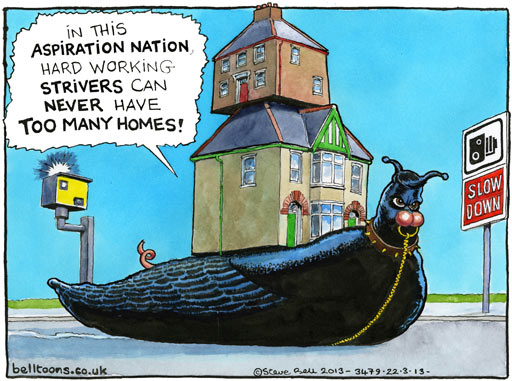
Well on the face of it, not much! As the proportion of UK homeowners is the lowest for some time under the Tory leadership, Cameron’s policy slots nicely into his Aspiration Britain theme and his much harped on about desire to help those who want to “Work hard and get on”.

As more banks catch up with the schemes early implementation, we should see more 95% mortgages offered, and more Britons getting that first precious foot on the elusive housing ladder. As homeowning is a much ingrained part of the British psyche (not least supported by the ongoing success of television favourites such as Location, Location, Location & Grand Designs) we’re likely to see many more of us achieving the dream. Right now the average age of a first-time buyer is (rather optimistically in my opinion) 30, with second-time buyers averaging at 39 - as historically mortgage lending was a far freer economy with flexible plans, 100% mortgages available, and greater freedom of movement up the ladder, the scheme is likely to be a popular one and considered long overdue.

SOURCE - The Telegraph

SOURCE - The Telegraph

For current homeowners, the news couldn’t be better. With the relaxation in mortgage lending, house prices should begin to rise. They can sit pretty in the knowledge that the value of their homes should rise before their eyes with no expensive improvements necessary. It’s rumored that (proportionately) this rise should equate to more on a weekly basis than they typically earn per week at work. Lucky them!

The wider economy is likely to feel a little boost, and the scheme should stimulate the building industry. This should be welcome news (even if only short-lived) as the need for more houses is a constant hum in the ears of any would-be government.

So it’s all good then?

Not so fast.

Inevitably the interest rate you will have to pay on a 95% mortgage will be considerably higher than if you were able to offer a bigger deposit. Over the term of the loan you will therefore end up paying substantially more than those who had a little more upfront. This leads us nicely into the biggest risk of all - if we see a real increase in mortgages at 95% of a lightly inflated value (remember I mentioned house prices would rise) then all you would need is a slight increase in interest rates and a dip in house prices, and you could find yourself in negative equity with a huge debt you cannot service.

SOURCE: Steve Bell for The Guardian

SOURCE: Steve Bell for The Guardian

This might sound like a worthwhile risk to you. Afterall if you plan to hold onto your new asset for a considerable length of time, you might decide you can ride out this climate of economic uncertainty and cash in / trade upwards when the time is right. But in reality, we just cannot predict what is around the corner. In an age of low job security, coupled with wildly fluctuating interest rates, your investment could well become a noose around your neck. Some have gone so far as to argue that the Help to Buy Scheme’s legacy will be little more than artificially engineered economic growth offset by increased household debt.

Remember the old addage “If something looks too good to be true, it often is”? Well this could well apply in this instance. For the government, the risk is fairly low. They will act as a virtual guarantor for your loan - a kind of insurance for banks & building societies if you will. The only cost to them will be if you default on a loan. In this instance, they will have to cover the shortfall. The cost of this however will be largely born by the homeowner themselves as they will be paying a greater proportion of interest over the term of their loan.

It’s also worth bearing in mind that if house prices rise, then houses themselves become less affordable. Although the scheme will benefit many, others will find themselves priced out of the market and even further from the realisation of owning their own home than before! It could even be argued that Cameron is further fuelling the class gap by widening that between the lower and middle class.

And whilst the focus is on lending to housing, industry is left on the back-burner. With SME’s begging for greater flexibility in lending, once again they’re left in the cold. It smacks of an attempt to crowd-please without addressing the need to nurture business and grow the economy from within. Although Cameron and his boys will refer me to the handful of concessions made to small businesses as outlined by their manifesto, these in no way stack up to what’s on offer to the general public on this occasion.

So am I just slamming the entire policy?

Not at all. I just question the economics.

For those desperate to own their own home, this could well be the best opportunity yet. If you are keen, I’d move double quick to take advantage before house prices see your dream home fall out of reach. I’d also be prepared to stay in for the long haul and expect yourself to fall in and out of negative equity for a few years to come. In a few years time, you also may well have to accept that a better deal may have been available if you’d hung on for just a little longer for the economy to further recover.

Furthermore in an age of low job security, renting shouldn’t be considered a bad option. Although we’ve all heard it criticised as effectively “throwing money down the drain” - this isn’t necessarily the case in today’s uncertain economy. We’re no longer a society that stays in the same organisation (or even career) for 20 years. This makes financial planning a potential minefield. There are also a wealth of hidden costs associated with owning your own home that a renter won’t have to consider. If you can stay renting, yet put aside even the smallest amount into a high interest savings account for a few more years, it might well be worth growing a healthy deposit before rushing into the Help to Buy Scheme.


Ignorance, Neglect & Excuse-led Parenting: A Growing Number of School Children Still in Nappies

Posted on

We’ve all heard people say that “no one ever wrote a book on how to be a good parent” (an excuse usually batted out on Jeremy Kyle as to why little Johnny ended up in the care system) - it always makes me bristle a bit as plenty of people have done exactly that. For me, common sense and plain old research play a large role in my response to parenting Dexter. I’m never afraid to ask my peers if I get stuck, but Google has also helped us out on more than one occasion. This is particularly true when Craig and I are mulling over when to introduce new foods, new play, and new challenges (such as potty training) to Dexter.

This is why a recent study by the Centre for Social Justice (CSJ) as reported by BBC News yesterday, really got me thinking. It centred on the fact that some school children enter the system some two years behind where they should be developmentally, and without the rudimentary social skills needed to get the most from the education system. Worse still, there are a growing number of 4 and 5-year-old school children still in nappies and unaware of their own names.

This think tank haven’t held back any punches. They’ve cited an increase in entry-level children who have clearly had an “abysmal” start in life, and parents who “just can’t be bothered”. Although there was a distinct lack of hard evidence in the article, read instead as a social commentary on our primary school education system, it’s still very worrying, and very hard to ignore.

Is there ever an excuse for such woefully ineffective parenting? Or is this, in fact, symptomatic of child abuse? If so, what can be done about it?

Rather than focus on these questions the report turns instead to causation. In my opinion, it mistakenly cites nuclear family breakdown as a major cause - a social problem too often exaggerated in my opinion. The truth is that these children are being failed by more than one parent in order to fall so drastically behind the levels of development expected for their age. Rather, the next cause cited seems more realistic.

Emotional neglect from disengaged parents is also a damaging factor for children’s development, says the study. There are also 700,000 children living with parents who are “dependent drinkers” and 335,000 with “dependent drug users” BBC News

This, for me, is the only cause for this problem. That’s over 1 million high risk children being failed by their parents; as neglect is a form of child abuse in itself, that’s over 1 million potential Baby P’s and Daniel Pelka’s living in our society.

The Government response seems less than decisive. Despite increasing the pupil premium to £2.5bn a year and doubling the number of disadvantaged two-year-olds eligible for free nursery places to 260,000 - this is a reactionary measure, rather than an attempt to save these children from a potentially damaging home environment. What if there really is an altogether simpler solution that will allow us to distinguish between genuinely naive parents, and those who simply can’t be bothered?

SOURCE: NHS Choices

It seems to me that it is parents who need educating, rather than children. Give them the tools and knowledge to better nurture their children, and some of the preschool skills gap might be addressed. Don’t send known high risk babies home to their drug dependent families without giving them a clear set of expectations. Put crudely, what if parents were given a manual on the basics of childcare at the time of birth?

I think it’s taken for granted that new mum’s will have online parenting resources, and the confidence to seek advice from their peers. If instead, it is clearly spelt out that children should be hitting modest levels of attainment month by month, then parents can better prepare their preschoolers for life in the classroom, and potentially spot special needs children earlier. Perhaps more importantly, it might help weed out those children who are being let down by neglectful parents.

This isn’t even a new concept. The Birth to Five book used to be routinely given out to all new mothers - I know my own midwife mentioned the fact that it was available to buy from the NHS website shortly after I had Dexter (she was mistaken, by then print versions had been discontinued). Although the same information is now available on the NHS choices website, this might not be accessible to all.

This would obviously need to rolled out in tandem with a whole host of other initiatives to tackle the problem from source. Specifically, we’d need to come down much harder on those parents who aren’t showing due care and attention to the needs of their children. But just maybe a back-to-basic approach would help improve the early prognosis for some preschoolers - let’s face it, anything is worth a try to prevent children being failed by their parents: Ignorance of key milestones their children should be meeting in advance of starting school is simply not good enough in today’s society.

FURTHER READING:

“More pupils wetting themselves, say teachers” BBC News

“Education Underclass” of children in the UK is still in nappies when they start school The Independent


Related Posts Plugin for WordPress, Blogger...