Why no garden is too small for trees

Posted on

We’re so lucky as a nation that our government respects our need for green spaces. Almost every household has a public park within 5 mins of their front door, and millions of us have access to private gardens.

Outside space does however come at a premium, and most of our gardens are extremely modest in size. Still, we’ll pop in a few flower beds, lay a little decking and create some alfresco dining space for long summer nights. In short, we’ve become experts in making the most of what we have.

With this in mind, you might think your garden is simply too small for a tree, but I’m hoping to convince you this is not the case.

The importance of trees

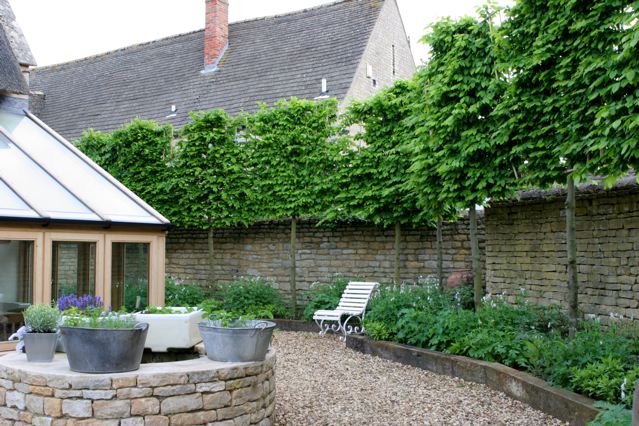
Many people already have a fence surrounding their property, commonly around 6ft tall. Whilst this acts to delineate land and show boundaries, if you still feel overlooked by your neighbours, trees act as a perfect natural screen; providing extra privacy without compromising on look. A tidy, even screen formed by a line of repeating evergreen trees is an effective and space-saving solution.
Walnut-House-5

The beauty of evergreens is that they offer a dense, year round solution & have additional sound-cancelling properties should your neighbours be on the loud side. They can also be easily shaped and contained with regular pruning.

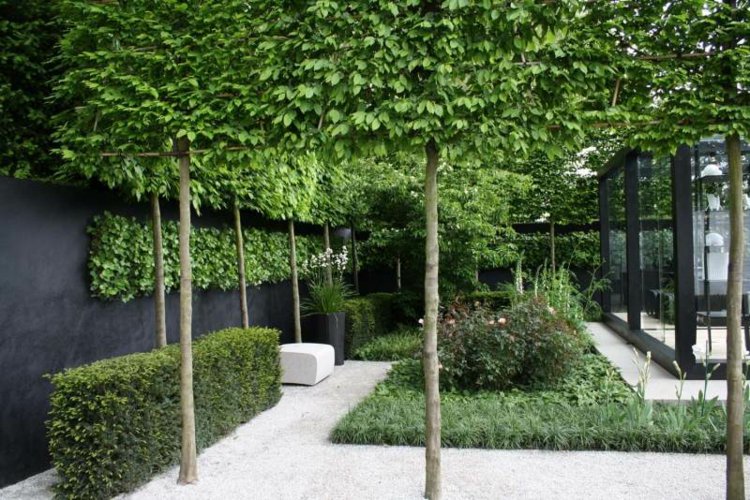
Where high screening is required in a very small space, slender & soft conifers make for easy shaping, or plump for a clear stemmed tree such as a cherry laurel which will still allow for under-planting.
arbuste-persistant-arbres-fruitiers-haie-buis-plantes-vertes

Colourful specialist trees for tight spaces

Evergreens not pretty enough for you? There are a whole host of ornamental trees for small gardens here in the UK that might just fit the bill…

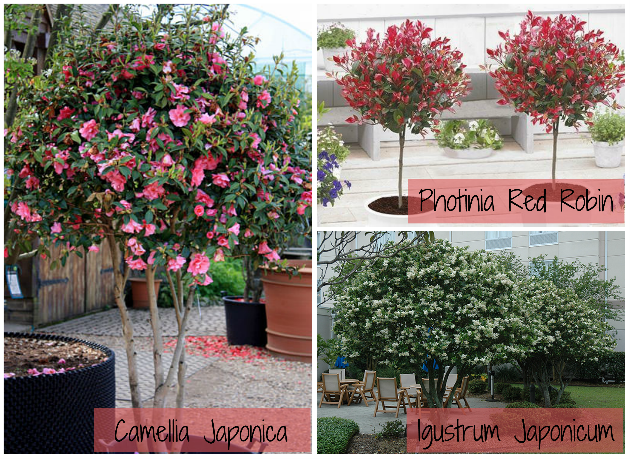
Privet trees (e.g. Igustrum Japonicum): With it’s dense dark green foliage, when strategically planted this tree is great for blocking out eyesores beyond your boundary. It’s also technically semi-evergreen so will only defoliate should the temperature drop to around -10c, and thrives in most free-draining soil types. Better still, in the autumn it boasts small white flowers for extra interest.

Photinia Red Robin: On 1.8-2m clear stems, this tree is an evergreen offering good all year round coverage. For a little more colour, this tree’s leaves emerge a glorious red contrasting with its existing greenfoliage. Clusters of tiny white flowers also arrive late spring making the Photinia a real statement piece.
Trees

Camellia Japonica: For something a bit more unusual, you might try the highly fragrant Camellia Japonica. The species has lush, polished evergreen leaves set in a rigid and formal, pyramidal crown, with striking red flowers appearing in February to April. Slightly trickier to grow, it prefers moist, acidic, well-drained soils and partial shade.

Best practice planting

If space really is limited, pleached trees (that have been trained to grow into uniform shapes) can be purchased in pots, as can smaller ornamental trees like olive trees. As these are likely to be more mature when you buy them, you can expect to pay a premium. They are however a pretty sound investment as they’ll already be acclimatised to the British weather. Simply place throughout your garden and you’re all set.

If you are planting a long-stemmed tree into the ground, do your research first. Test the pH level of your soil, and make sure it is optimised for your tree. As regards the recommended distance for planting screening trees from one another, it is entirely dependent on how instant you would like to formulate a screen and how much you are looking to spend; 1m apart will offer fairly instant privacy; 1.5m will leave small gaps between the trees which should fill out in 1-2 years from planting etc.

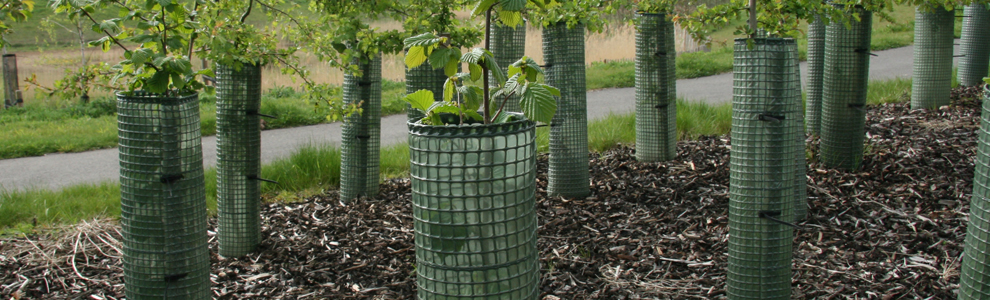
If you’re growing from saplings, I would also recommend purchasing tree guards. Not only will this protect against local herbivores and soil dwelling insects, it will also encourage your tree to grow a stronger healthier trunk. They will also help train your tree to grow tall and straight, so it will grow to provide the most effective screen at a later date.
Shelterguard-shrubs-landscape

Finally, prune your tree annually to keep it healthy. When to prune depends on the variety of tree, but most deciduous trees are best pruned when dormant, in late autumn or winter. In the first year remove the lowest third of the tree’s branches, and shorten those in the middle third by half. Remove these latter branches in the following year for a clean-stemmed & densely topped tree.

Check out Landmark Trading for all your tree-growing needs, and more resources and tips.

There you have it, my tips for planting trees effectively in small spaces. As last week was #NationalTreeWeek there’s no better time to get planning your tree-filled garden. Best of luck!


How to give gardening another go when you’ve lost your confidence

Posted on

Capture

Are you keen to sort out your garden, but have been put off due to previous failures? It can be disheartening when your gardening efforts come to nothing, and in many cases you’ll have no idea what went wrong. If you want to give it another go, here are a few tips that will give your plants the best chance possible.

Soil

Different plants require different kinds of soil to thrive. Take peat or clay soils, for example, these are heavy and retain a lot of moisture. Sandy soils on the other hand are lighter and will drain more quickly. Different plants will require different types of soil, so it’s important to do your research rather than just plant them in anything you have to hand. It’s also advisable to test the pH level too as some plants prefer acidic soil and some more alkaline. Getting the soil right is a fundamental step, as it means whatever you plant stands the best chance of survival.

Watering

Even if you use the correct type of soil, you still need to get the moisture level right with watering. Too little and they will shrivel and dry up, too much and the roots can become waterlogged and rotten. In short, there’s a fine balance; you don’t want to neglect your garden but don’t kill it with kindness either. In most cases, just watering to keep the soil lightly moist will keep plants happy. If you haven’t had any rain for a while, then use a hose or watering can.

Temperature

Many plants will struggle to flourish if the temperature isn’t right. If you plan on growing outdoors you need to appreciate the climate zone you’re in and take steps to ensure you’re best supporting your plants.

This shouldn’t put you off growing plants that aren’t best suited to our changeable climate. Tropical plants can thrive within a greenhouse for example. I tend to prefer Eden Birdlip greenhouses as there’s no bar under the door so you can get in and out with a wheelbarrow. Greenhouses can be hot, warm or just a cold frame to protect them from harsh winds, so do your research before making any costly mistakes.

Competition

Finally, certain plants should never be put next to each other as they will compete for the same nutrients in the soil. For this reason, planning out your plot before you start planting up is key. If you’re planting things purely for aesthetics and haven’t given this due attention, this could well be the reason if your efforts fail. Teach yourself which plants are natural ‘friends’ and will work well when they are planted together, and those which will compete for the same nutrients.

Have you ever had a failure in the garden which has put you off trying again? Now you’re aware of some of the issues, would you be prepared to give it another shot?


Making the most of a small garden

Posted on

Title

I don’t suppose there are too many of us who wake up, look out onto our gardens and say to ourselves “I wish my garden was smaller” - I’m willing to bet most of us will say the reverse. For those of us who are, let’s say, creatively challenged, it can be hard visualising what to do with our postage stamp-sized gardens. So much so that many of us will simply drop in some rattan and a firepit, and sit outside in bland and uninspiring spaces, depriving ourselves of all the colour and vibrancy that plants can bring.

Whether your mini garden is currently unloved, or you’ve big plans for the summer that you’ve yet to implement, Suttons have come up with some great ideas to make the most of a small space. Their top-tips will make a smaller garden look bigger and at its best this summer, even if it’s only you that fits in it!

Growing vertically

If your garden is short of space, and you would like to add a little texture, colour and impact, then why not try growing plants, vegetables and flowers vertically as opposed to along the ground?

Upside-down planters

Upside-down planters look a little strange at first glance, but they’re a sure-fire way to add a whole lot of interest to a garden without compromising on space. It’s easier than you think to create the look, and your garden is provided with a futuristic aesthetic that is sure to turn a few heads.

sky planters

Just suspend planters from trees in your garden, your fence or a wooden trellis. They can also be used for planting tomatoes, if you want to grow-your-own yet are short of space.

Tall vegetables

Squash, beans and varieties of cucumber (not the bush variety) can be planted on a trellis, or for pole beans try using a bean tepee. Pop a few Bamboo poles into soft ground then simply gather them together at the top to create a loose tripod shape. Guiding and training your plant to stay within the plant supports can see them growing some 5ft tall - saving lots of space elsewhere in your garden.

Tiered planters

An alternative to raised flowerbeds that can take up too much room on the ground, tiered planters are great for smaller spaces. Tall upright plants such as thrillers create a striking look in your planters, and could be used as a feature against walls or fences, making the boundaries of your garden less obvious. Or, if you’d like a more traditional look and feel within your garden, why not try spillers, which flow outwards and trail over the sides of your planters – cascading down. If you’d like a mixture of various plants, then pop in some fillers, which sit in amongst spillers to make a distinction of colour and texture within your planters.

For a cleaner look, consider upcycling old step ladders to act as space-saving shelving for smaller flower pots. Not only a great idea for flowers, this also makes for a attractive urban herb garden.

tiered planters

Creating focal points

A focal point can provide the illusion of space and allow you to create defined ‘zones’ within your garden. Each focal point will showcase a different element - be these social or functional.

  • A cluster of plants will add texture, colour and vibrancy to your garden. This may take the form of a collection of all white flowers, such as the Mexican fleabane, or alternatively, lavender which looks (and smells) great all year round.
  • Bird baths are a great way of attracting wildlife that you wouldn’t otherwise see in your garden. Adding a simple wildlife-friendly feature means your view will be constantly shifting throughout the seasons.
  • Seating should also be a prominent feature in your garden. If you’re short on space, opt for a simple Jack and Jill bench or a simple metal framed breakfast set.

As long as you’re sensible, and you use space effectively, then it’s easy to give the illusion your garden is bigger than it actually is. After all, no garden is too small, every single one has the potential to be something amazing.

Related Posts Plugin for WordPress, Blogger...