
We’re so lucky as a nation that our government respects our need for green spaces. Almost every household has a public park within 5 mins of their front door, and millions of us have access to private gardens.
Outside space does however come at a premium, and most of our gardens are extremely modest in size. Still, we’ll pop in a few flower beds, lay a little decking and create some alfresco dining space for long summer nights. In short, we’ve become experts in making the most of what we have.
With this in mind, you might think your garden is simply too small for a tree, but I’m hoping to convince you this is not the case.
The importance of trees
Many people already have a fence surrounding their property, commonly around 6ft tall. Whilst this acts to delineate land and show boundaries, if you still feel overlooked by your neighbours, trees act as a perfect natural screen; providing extra privacy without compromising on look. A tidy, even screen formed by a line of repeating evergreen trees is an effective and space-saving solution.
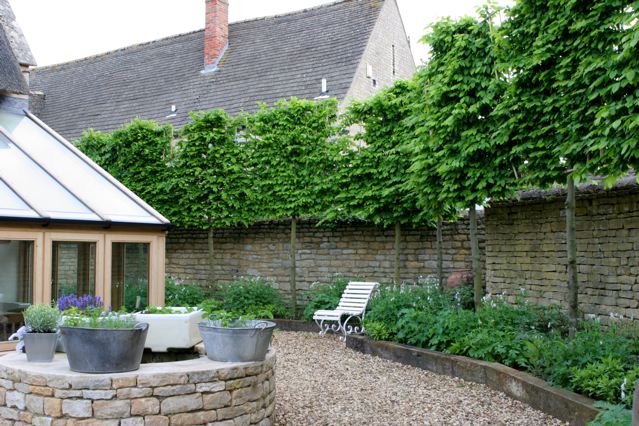
The beauty of evergreens is that they offer a dense, year round solution & have additional sound-cancelling properties should your neighbours be on the loud side. They can also be easily shaped and contained with regular pruning.
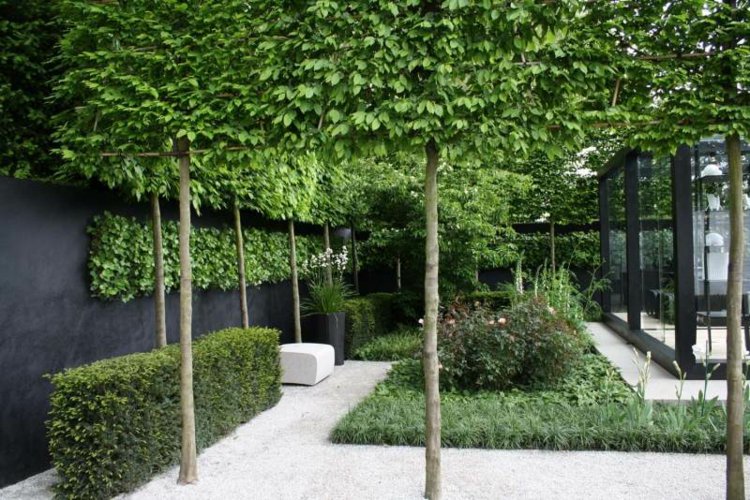
Where high screening is required in a very small space, slender & soft conifers make for easy shaping, or plump for a clear stemmed tree such as a cherry laurel which will still allow for under-planting.
Colourful specialist trees for tight spaces
Evergreens not pretty enough for you? There are a whole host of ornamental trees for small gardens here in the UK that might just fit the bill…
Privet trees (e.g. Igustrum Japonicum): With it’s dense dark green foliage, when strategically planted this tree is great for blocking out eyesores beyond your boundary. It’s also technically semi-evergreen so will only defoliate should the temperature drop to around -10c, and thrives in most free-draining soil types. Better still, in the autumn it boasts small white flowers for extra interest.
Photinia Red Robin: On 1.8-2m clear stems, this tree is an evergreen offering good all year round coverage. For a little more colour, this tree’s leaves emerge a glorious red contrasting with its existing greenfoliage. Clusters of tiny white flowers also arrive late spring making the Photinia a real statement piece.
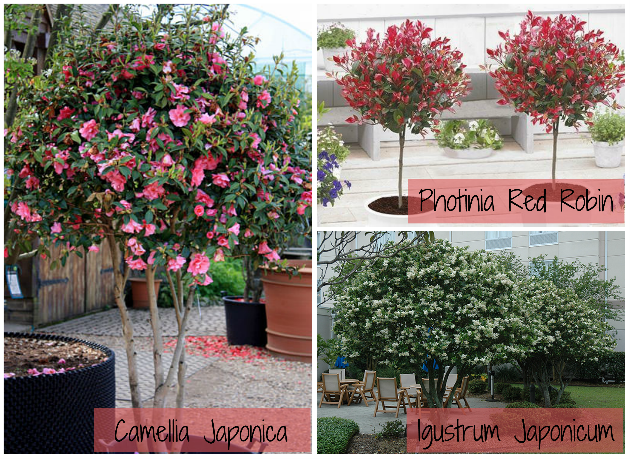
Camellia Japonica: For something a bit more unusual, you might try the highly fragrant Camellia Japonica. The species has lush, polished evergreen leaves set in a rigid and formal, pyramidal crown, with striking red flowers appearing in February to April. Slightly trickier to grow, it prefers moist, acidic, well-drained soils and partial shade.
Best practice planting
If space really is limited, pleached trees (that have been trained to grow into uniform shapes) can be purchased in pots, as can smaller ornamental trees like olive trees. As these are likely to be more mature when you buy them, you can expect to pay a premium. They are however a pretty sound investment as they’ll already be acclimatised to the British weather. Simply place throughout your garden and you’re all set.
If you are planting a long-stemmed tree into the ground, do your research first. Test the pH level of your soil, and make sure it is optimised for your tree. As regards the recommended distance for planting screening trees from one another, it is entirely dependent on how instant you would like to formulate a screen and how much you are looking to spend; 1m apart will offer fairly instant privacy; 1.5m will leave small gaps between the trees which should fill out in 1-2 years from planting etc.
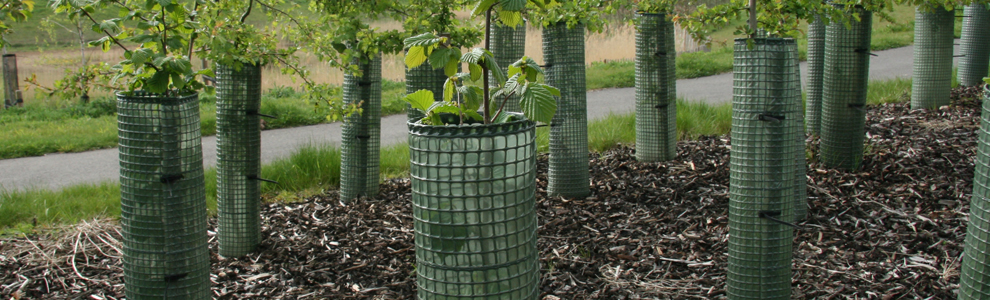
If you’re growing from saplings, I would also recommend purchasing tree guards. Not only will this protect against local herbivores and soil dwelling insects, it will also encourage your tree to grow a stronger healthier trunk. They will also help train your tree to grow tall and straight, so it will grow to provide the most effective screen at a later date.
Finally, prune your tree annually to keep it healthy. When to prune depends on the variety of tree, but most deciduous trees are best pruned when dormant, in late autumn or winter. In the first year remove the lowest third of the tree’s branches, and shorten those in the middle third by half. Remove these latter branches in the following year for a clean-stemmed & densely topped tree.
Check out Landmark Trading for all your tree-growing needs, and more resources and tips.
There you have it, my tips for planting trees effectively in small spaces. As last week was #NationalTreeWeek there’s no better time to get planning your tree-filled garden. Best of luck!
